
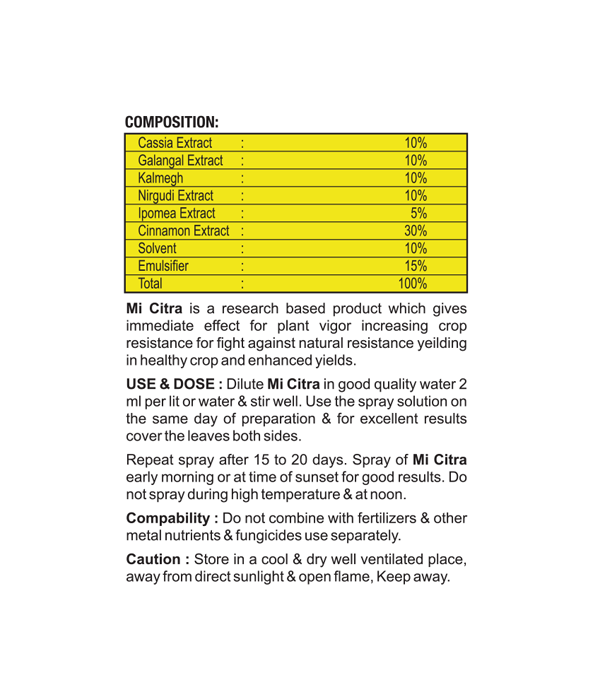
Build resistant blockers in the resistance chain.
Increases immune system against plant offer and same kind of sucking paste in the plant.
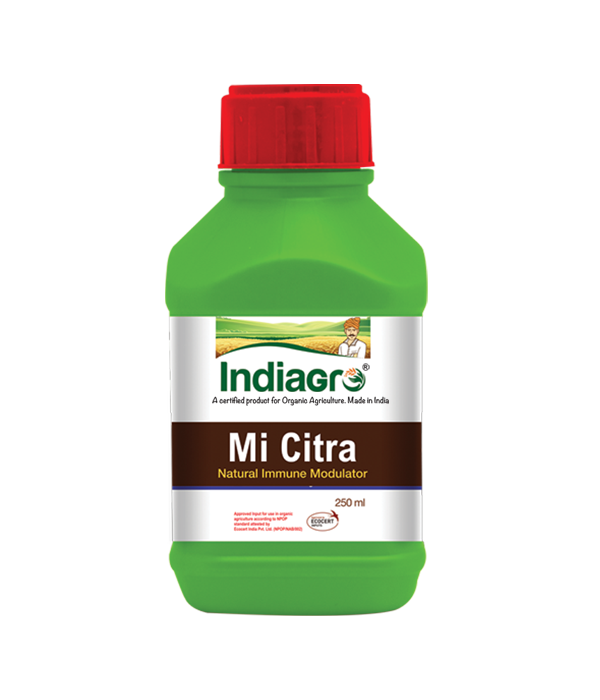
Field Trials: Numerous field trials have demonstrated the efficacy of Mi Citra in controlling BPH populations in rice fields. These studies show a significant reduction in BPH numbers and associated crop damage.
Soil Health: Research indicates that Mi Citra helps in maintaining soil health by not disrupting beneficial soil organisms. This contributes to overall soil fertility and crop productivity.
Resistance Management: Studies confirm that Mi Citra does not contribute to pest resistance, making it suitable for long-term use in pest management programs.
Integration with IPM: Integrate Mi Citra into an Integrated Pest Management (IPM) program to enhance its effectiveness. Combining it with other organic or biological control methods can provide a comprehensive approach to pest management.
Mode of action – Contact
Application Method: Spray
Use appropriate spraying equipment to ensure even distribution of the solution across the crop. Avoid applying during the hottest part of the day to reduce evaporation and enhance absorption.
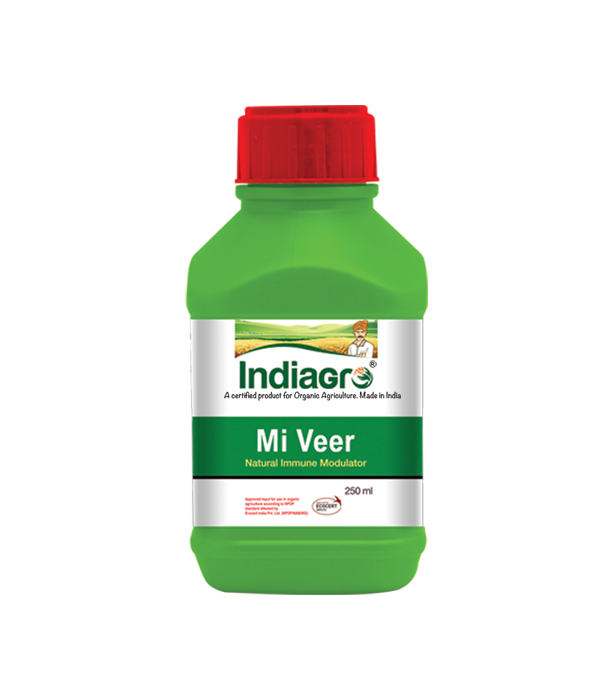
Dont’s: Mi citra and Mi Veer should not mix with Mi proud and any Sulphur-based products which causes hazardous effects to the plant.
Safety Guidelines:
Personal Protective Equipment (PPE): Wear protective clothing, gloves, and eyewear while handling and applying Mi Citra to avoid direct contact with the skin and eyes.
Safe Handling: Avoid inhaling the spray mist and ensure good ventilation during application. Wash hands thoroughly after use.
Environmental Precautions: Prevent runoff into water bodies to protect aquatic life. Dispose of empty containers and unused product according to local regulations.
Seasonal Application Guidelines:
Pre-Season Preparation:
Soil Health Check: Before the planting season, test your soil to ensure it is in good condition and free from any previous season’s pests.
Equipment Maintenance: Ensure all spraying equipment is clean, functional, and calibrated to apply Mi Citra effectively.
Planting Season (Early Spring):
Initial Application: As soon as rice seedlings are transplanted, apply Mi Citra to provide an early defense against BPH. This helps in establishing a pest-free environment for young plants.
Regular Monitoring: Begin regular scouting for BPH signs. Early detection is crucial for timely intervention.
Growing Season (Late Spring to Early Summer):
Second Application: If BPH presence is detected, apply a second round of Mi Citra. This reinforces the protection and helps in controlling any emerging BPH populations.
Integrated Practices: Combine Mi Citra application with other organic or biological controls for enhanced pest management. This can include introducing natural predators of BPH or using trap crops.
Peak Season (Mid to Late Summer):
Peak Infestation Monitoring:BPH populations typically peak during the mid to late summer. Intensify monitoring efforts during this period.
Additional Applications: Depending on the severity of the infestation, additional applications of Mi Citra may be required. Follow the recommended intervals between applications to avoid overuse.
Late Season (Early Fall):
Final Application: Apply a final round of Mi Citra to ensure the crop remains BPH-free as it approaches maturity. This helps in maintaining grain quality and yield.
Post-Harvest Care: After harvest, conduct a thorough cleanup of the field to remove any plant residues that could harbor pests. Proper field sanitation reduces the risk of BPH carryover to the next season.
Off-Season (Winter):
Soil Rest: Allow the soil to rest and rejuvenate. Consider planting cover crops to improve soil health and organic matter content.
Review and Plan: Evaluate the effectiveness of Mi Citra applications and plan for the next season. Adjust application schedules and integration strategies based on observations and results.